AI Agent vs Chatbot: What Is the Difference and Which Does a Business Need?
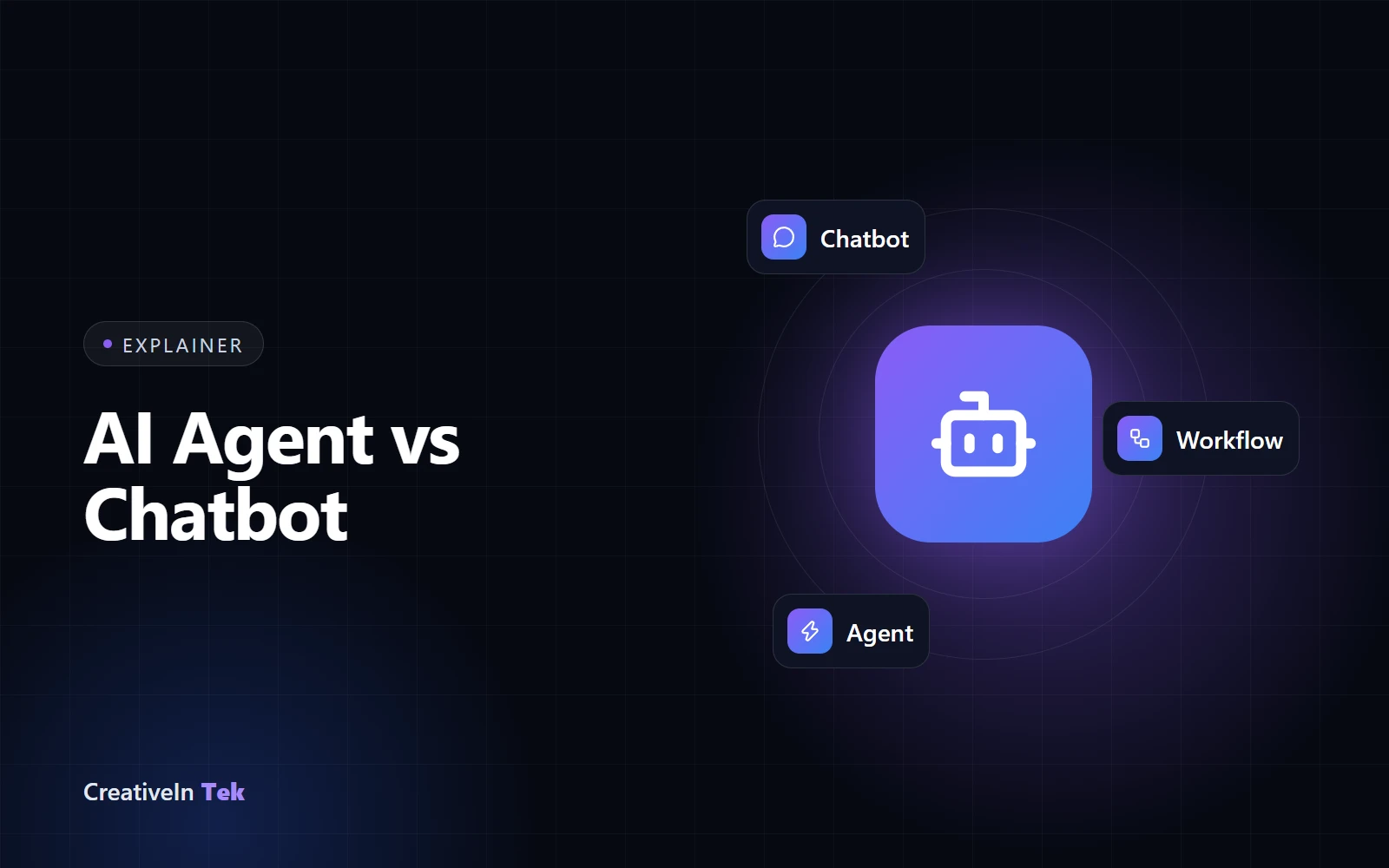
AI agent vs chatbot is a choice that matters to any business deciding what to build or buy, because the two cost different amounts, carry different risks and solve different problems. A chatbot, in everyday use, answers questions in a conversation. An AI agent goes further: it can decide which steps to take, use tools such as a calendar or a database and act on the world, not only reply. This guide explains the difference using the definitions in Anthropic's engineering article on building effective agents, read on 17 November 2026, adds plain-language examples for small businesses and sets out when a simple chatbot is enough. It does not claim that one is better, because the right choice depends on the task, the risk and the budget. The guide is informational, and vendor products and prices change.
Key takeaways
- Anthropic defines workflows as systems where language models and tools follow predefined code paths, and agents as systems where the model dynamically directs its own process and tool use.
- The same article recommends finding the simplest solution possible and increasing complexity only when needed, and says a single model call with retrieval is often enough.
- Agentic systems often trade latency and cost for better task performance, and their autonomy means higher costs and the potential for compounding errors.
- For a small business, a chatbot or fixed workflow suits predictable questions, while an agent suits open-ended tasks where the steps cannot be fixed in advance.
- Whatever is built, keep a person in charge of money, complaints and anything irreversible.
AI agent vs chatbot: the core difference
Anthropic's article draws the line architecturally. It describes workflows as systems where language models and tools are orchestrated through predefined code paths, and agents as systems where the model dynamically directs its own processes and tool usage, deciding how to accomplish a task. It treats both as agentic systems and presents agents as an extension of familiar chatbot interfaces with added tool integration, such as customer support that can look up orders or issue refunds. In plain terms, a chatbot talks, a workflow follows a fixed script that may include model calls, and an agent chooses its own next step. The more freedom the system has, the more it can do and the harder it is to predict.
What an AI agent adds to a chatbot
- Tools: the ability to search a knowledge base, check a calendar, create a booking or update a record. Anthropic describes the basic building block as a model augmented with retrieval, tools and memory.
- Planning: deciding the sequence of steps toward a goal, rather than answering one message at a time.
- Feedback from the environment: the article says agents gain ground truth from tool results at each step to assess progress.
- Autonomy: operating for several steps without a person, and pausing for human input at checkpoints or stopping at a maximum number of steps.
When a plain chatbot or workflow is enough
Anthropic's guidance is to find the simplest solution possible and increase complexity only when needed, and it says that for many applications optimising a single model call with retrieval and examples is usually enough. That advice suits most small businesses. A chatbot that answers opening hours, prices, location and common questions from an approved knowledge base is often all that is needed, and a fixed workflow that books an appointment through set steps can be more predictable than an agent. The article lists predictability and consistency as reasons to prefer workflows for well-defined tasks. The guide to building a chatbot on business data explains the retrieval approach in detail.
When an agent is worth it
The article says agents suit open-ended problems where the number of steps is hard to predict and a fixed path cannot be hardcoded, in settings where the system can be trusted to make decisions. For a small business that might mean a task like researching a customer's request across several systems, preparing a quote from changing inputs or triaging incoming messages that need different actions. The cost of that flexibility is real: the article says agentic systems often trade latency and cost for better task performance and that autonomy means higher costs and the potential for compounding errors, so they should be tested extensively in sandboxed environments with guardrails. The cost side of running an agent is covered in the guide to AI agent cost.
Risks to plan for
- Wrong answers presented with confidence: test against real questions and keep a handover to a person.
- Compounding errors: a wrong early step can affect later ones, so limit what an agent can change.
- Cost surprises: more steps mean more model calls, so cap usage and monitor spend.
- Hidden complexity: Anthropic warns that frameworks can add layers that obscure prompts and responses, so keep the design simple and visible.
- Customer data: decide what the system may see, where it is stored and how long it is kept.
A simple way to choose
- Write the task down: are the steps always the same? If yes, a chatbot or workflow is likely enough.
- List the tools needed: if it must change records or trigger actions, define exactly which and with what limits.
- Start small: build the simplest version, measure it on real conversations and add capability only if it clearly helps.
- Set limits: usage caps, a maximum number of steps and human approval for money or irreversible actions.
- Review regularly: read conversations, fix wrong answers and update information.
Where CreativeIn Tek fits
CreativeIn Tek builds AI agents for businesses through its AI solutions service and the AI Agent product, which answers customers on WhatsApp, linked by QR code. CreativeIn Tek does not claim that every business needs an agent, and a simple chatbot or workflow is sometimes the better answer. The WhatsApp connection options are explained in the guide to the WhatsApp Business API versus a QR-linked agent, and a business can talk to CreativeIn Tek about its task.
Frequently asked questions
What is the difference between an AI agent and a chatbot?
A chatbot answers questions in a conversation. An agent, as Anthropic describes it, dynamically directs its own process and tool use, so it can plan steps and act through tools.
Is an AI agent better than a chatbot?
Not automatically. Anthropic recommends the simplest solution possible, and says agents trade latency and cost for performance and can compound errors.
When is a chatbot enough?
When the task is well defined and predictable, such as answering common questions from an approved knowledge base or following a fixed booking flow.
Can an AI agent make mistakes?
Yes. The article warns of compounding errors, so agents should be tested in sandboxes, limited in what they can change and supervised for important actions.
Do I need a person involved?
For money, complaints, advice and anything irreversible, yes. Agents can pause for human input at checkpoints.
Last reviewed: 17 November 2026, against Anthropic's Building effective agents article. Products, prices and best practice change, and this guide is informational and not a ranking of any vendor.